


Heras fence covers for events turn temporary fencing into useful event assets by pairing large-format printing with materials engineered for visibility, wind performance and durability. This guide shows how custom Heras Covers for Events raise brand exposure, shield back-of-house areas, aid crowd control and reduce on-site headaches for event teams. You’ll learn which materials work best for windy festivals or wet outdoor sites, how to install and maintain covers for repeated use, and how to weigh cost versus sponsorship return.
Common event challenges — changeable weather, untidy service areas and missed sponsor revenue — are addressed by choosing the right material, print spec and fixing method. The guide is organised into six practical sections and includes a short note on Banner World Ltd.’s custom printing and express options for tight organiser timelines. We begin with how Heras covers convert vacant panels into high-impact branding and operational tools.
How do custom Heras fence covers amplify event branding and advertising?
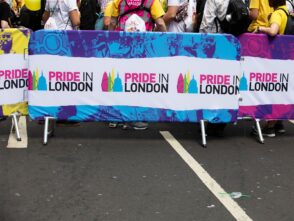
Custom Heras covers stretch long sightlines into continuous branded canvases that repeatedly expose attendees and passers-by to logos, messages and sponsor artwork. Practically, printed perimeter panels create sustained impressions from multiple angles; consistent colour and type choices improve recognition and recall during and after an event. Good design focuses on distance legibility, high contrast and placing calls-to-action where footfall is highest. As a result, fence covers serve as both outdoor advertising and tidy privacy screening, increasing sponsor value while keeping the site visually coherent and professional. Below we look at specific visibility gains and how panel layouts drive measurable sponsor outcomes.
For practical branding and sponsor conversion, Banner World Ltd. offers full-colour custom printing across materials sized for standard Heras panels, making it straightforward to turn creative into finished panels.
How do printed Heras fence banners increase brand visibility at events?
Printed Heras banners increase visibility by using size, repetition and strategic placement to maximise impressions during concentrated windows — for example at festival entrances, stage fronts or pitch-side. Large-format graphics create a dominant visual field that boosts logo recall across repeated passes; repeating motifs along the perimeter multiplies exposure. Design best practice includes bold type, a limited palette for contrast and placing primary logos at eye level on key panels to exploit sightlines. You can improve measurable outcomes — estimated impressions and sponsor recall — by mapping banners to crowd flows and peak viewing spots, which feeds into sponsor panel strategies described next.
How can sponsors and partners use Heras fence covers for effective promotion?
Sponsors structure perimeter campaigns with tiered panel placement: headline panels for primary partners and smaller repeat panels for secondary sponsors to balance prominence and revenue. Tactics include reserving entry panels for headline partners, grouping panels for a narrative flow, and alternating sponsor and event branding to keep a clean look. Sponsors get better ROI by aligning creative with activation zones (stage entrances, hospitality areas) and using consistent brand colours and short taglines legible at distance. These layout choices also determine production needs — for example using higher-fidelity materials for headline panels — which links directly to material selection covered next.
Predicting ROI in Sponsorship: Brand Exposure and Pricing Models Predicting return on investment in sport sponsorship: Modeling brand exposure, price, and ROI in Formula One automotive competitionPredicting return on investment in sport sponsorship: Modeling brand exposure, price, and ROI in Formula One automotive competition, JA Jensen, 2014
What functional benefits do Heras fence screens deliver for events?
Heras fence screening gives organisers three core benefits: privacy and concealment, improved crowd management and wayfinding, and a polished visual presentation that reduces perceived risk and enhances attendee experience. Privacy comes from opaque or full-coverage prints that hide loading zones and temporary infrastructure, protecting brand image. For safety and crowd control, simple printed messaging and colour coding create clear zones and directional cues that help stewards and reduce friction at busy points. Aesthetically, consistent perimeter graphics replace ad-hoc hoardings with durable, weather-ready visuals that hold up across multi-day events. The sections below explain concealment use-cases and practical wayfinding approaches.
How do Heras fence covers conceal unsightly or sensitive areas?
Heras covers provide a seamless visual barrier between guests and service areas — loading bays, storage or staff zones — using opaque or high-coverage fabrics to block sightlines and protect brand perception. Organisers commonly place covers around stage wings, backstage perimeters and equipment compounds to avoid negative impressions or unwanted media shots. Material choice affects opacity and finish: solid-weave or tight-knit fabrics give full concealment, while partially transparent options keep airflow where needed. Picking the right material for concealment supports both privacy and safety, and ties into how covers can double as directional signage.
How do fence covers support crowd control and wayfinding?
Fence covers turn perimeter space into clear directional signage and zone markers that guide movement, mark entrances/exits and highlight steward points without extra freestanding posts. Consistent graphics — numbered gates, colour-coded zones or arrows — reduce hesitation and speed up ingress and egress, improving safety and cutting the need for staff intervention. Best practice is to map wayfinding to sightlines, use high-contrast symbols for quick recognition and repeat key messages at intervals to reinforce routes. These simple strategies improve operational flow and complement the privacy and branding uses already discussed.
Which materials work best for Heras fence covers in outdoor conditions?
Material choice depends on wind exposure, desired print fidelity and intended reuse. Typical options are PVC mesh for a balance of print clarity and wind-shedding, airmesh for high-wind sites, and heavy-duty scrim for repeated hires or long-term installs. Performance is judged by wind permeability, UV resistance, print resolution and tensile strength — and matching the material (PVC Mesh Heras Fence Cover, Airmesh Heras Fence Cover, Heavy Duty Heras Fence Cover) to the site is key. Prioritise wind permeability for exposed or coastal events and denser scrims for sheltered corporate displays. The table below compares core attributes to help selection, followed by a short product summary.
|
Material Type
|
Key Attribute
|
Typical Value / Recommendation
|
|---|---|---|
|
Wind permeability and print clarity
|
Moderate permeability, high print fidelity — good for general outdoor events
|
|
|
High wind resistance and airflow
|
High permeability, reduced wind loading — ideal for exposed festival sites
|
|
|
Durability and repeated hire use
|
Lower permeability, robust finish — best for long-term or rental programmes
|
This comparison shows how material choice trades off wind performance and visual quality.
Banner World’s products map to these categories — PVC Mesh, Airmesh PVC scrim and Extra Heavy Duty options — so organisers can match materials to site conditions without losing print quality.
What are the advantages of PVC Mesh, Airmesh and Heavy Duty covers?
PVC mesh offers strong print quality with reasonable wind-shedding, making it a versatile choice for many outdoor events that need a balance of visibility and airflow. Airmesh boosts wind permeability and lowers wind loading, reducing the risk of damage in exposed or coastal festival sites. Heavy duty scrims deliver durability for repeat hires and storage, resisting tears and keeping graphics intact across events. Each material balances visual fidelity, cost and wind performance — understanding these trade-offs helps planners pick the right option for branding impact and operational resilience.
How does material choice affect wind resistance and weather durability?
Wind behaviour is driven by weave openness (permeability) and fabric strength, which together set wind loading and fastening intervals; open weaves let more air through but can reduce print saturation. Weather durability depends on UV-stable inks, protective coatings and reinforced edges — hems and metal eyelets stop tears spreading under load. For high-wind sites choose airmesh-style constructions and increase fastening frequency; for long-term outdoor displays favour UV-resistant, coated heavy scrims to preserve print life. These technical points feed into ensuring supply quality and meeting tight event schedules, covered next.
How does Banner World ensure quality and fast delivery of Heras fence covers?
Banner World Ltd. supports event teams with practical production and service features that reduce procurement friction: consistent print and finish QA, pre-production artwork checks, design support, express printing and clear trade pricing with instant online quotes for standard panel sizes. Our process flags file issues before print, offers multiple material options to suit site needs and provides express turnaround for compressed schedules. Trade pricing and plain-wrap deliveries make repeat buying and agency logistics simpler. The table below summarises key product and service attributes so organisers can compare benefits at a glance.
|
Product / Service
|
Feature
|
Typical Specification
|
|---|---|---|
|
Material Options
|
PVC Mesh, Airmesh, Heavy Duty
|
Multiple choices to match wind and durability requirements
|
|
Artwork Support
|
Artwork checking and design assistance
|
Pre-print checks to ensure colour and layout accuracy
|
|
Turnaround & Pricing
|
Express printing, trade pricing, instant pricing
|
Fast production slots and transparent trade terms
|
What customisation and artwork support does Banner World offer?
We provide artwork checks and large-format print capabilities so full-colour graphics reproduce correctly at scale. Our team reviews files to flag common issues — low resolution, incorrect panel layout or missing bleed — and advises on formats and adjustments to improve distant legibility. This pre-print support reduces reprint risk and speeds approvals on tight deadlines, making material selection and production planning more reliable.
How do fast turnaround and trade pricing help event organisers?
Express printing and trade pricing compress procurement timelines and reduce per-unit costs for repeat orders — critical for last-minute activations or multi-event programmes. Express options cope with schedule changes or late creative sign-off by offering accelerated production windows, while trade terms benefit agencies with predictable discounts on bulk or repeat buys. Plain-wrap delivery and stable pricing simplify on-site logistics and fast installations. These operational advantages feed into installation best practices and maintenance that extend product life.
How can you install and maintain Heras fence covers for long-term use?
Correct installation and routine maintenance protect structural integrity, print quality and reusability: proper fixings, tensioning and inspections reduce wind damage, and correct cleaning and storage prevent mildew and material breakdown. Installation relies on reinforced hems and metal eyelets to spread load, combined with cable ties or lacing to keep even tension. Inspect after high-wind events and make simple repairs to seams or eyelets to keep covers serviceable across many events. The sections that follow give step-by-step installation guidance and material-specific cleaning and storage recommendations to maximise lifespan and sponsor value.
Quick installation checklist with recommended hardware, spacing and reinforcement tips.
-
Use reinforced hems and metal eyelets: Fit through factory-reinforced points to avoid ripping under wind load.
-
Fasten with strong cable ties or lacing: Space ties evenly and add extra points at corners and seams.
-
Apply controlled tension: Don’t over-tighten — allow a small amount of give for wind movement.
What are the best practices for securely attaching Heras fence covers?
Best practice is to use cable ties at each eyelet, reinforce high-stress points with extra ties or lacing and keep tension uniform to prevent flutter and tear propagation. Add reinforcement at corners and mid-span tie points to absorb gust loads and lower eyelet failures. Fasten from centre to edges to create an even stretch and avoid puckering that harms appearance. Proper attachment reduces wind damage and helps preserve the cover for future use.
How should you clean and store fence covers to extend their lifespan?
Cleaning and storage depend on material: PVC mesh tolerates mild detergent and a soft brush, followed by full drying; premium fabric options may need gentler cleaning to protect coatings. Always air-dry completely before folding to prevent mildew and store in a cool, dry place away from direct sunlight to protect inks and prevent brittleness. Regularly check for small tears or worn eyelets and repair early to avoid bigger replacements. These routines keep covers reusable and improve lifecycle value.
What are the cost-effective advantages of using Heras fence covers for events?
Heras fence covers pay off through reusability, sponsorship income and lower per-event advertising costs compared with many single-use signs. Thinking in lifecycle terms reduces total spend while increasing revenue potential: reusable covers spread the initial build cost over multiple events, lowering average cost per event and improving CPM-equivalent values when panels are used across seasons. Sponsorship is often the main ROI driver — perimeter advertising commands higher fees because of sustained exposure. The table below outlines lifecycle cost comparisons to help organisers assess value.
|
Asset
|
Cost Attribute
|
Value / ROI Driver
|
|---|---|---|
|
Reusable Heras Fence Cover
|
Higher up-front cost, lower per-event cost
|
Amortised across events, strong sponsor revenue potential
|
|
Single-use Signage
|
Low initial cost, single event
|
Higher long-term cost if repeated, creates waste
|
|
Other Outdoor Ads
|
Variable pricing and placement
|
May deliver higher CPM for some audiences but less perimeter impact
|
How do reusable fence covers deliver value for event advertising?
Reusable covers lower average cost per event by spreading production costs across multiple activations and help secure longer sponsor commitments by offering extended visibility. A simple cost-per-event calculation — production cost divided by expected uses — makes comparisons easy against other ad formats’ CPM or flat sponsorship fees. Proper storage and maintenance increase reuse and improve ROI, making a slightly higher initial spend easy to justify when planning multi-event programmes.
Are there sustainable options for Heras fence covers?
Sustainability focuses on longevity, repairability and end-of-life options: choose durable constructions that reduce single-use waste, look for recyclable materials and ask suppliers about take-back or recycling schemes. Suppliers are starting to use longer-lasting inks and coatings and design panels to be repairable rather than disposable. Event buyers should ask about material composition and recycling options and prefer reuse programmes that extend asset life and cut waste. Considering sustainability alongside cost and performance completes modern procurement criteria.
-
Choose recyclable or repairable materials to reduce disposal impact.
-
Prioritise heavy-duty options to maximise reuse and reduce replacement cycles.
-
Ask suppliers about end-of-life programmes to ensure responsible disposal.
These practical steps help organisers align fence cover procurement with longer-term environmental goals.



Leave a Reply
You must be logged in to post a comment.