Item Information:

Size:

Please Select
selected tick icon

Finish:

Please select
unselected tick icon

Quantity:

unselected tick icon

Artwork:

Please select
unselected tick icon
Next Step Add to Basket

Calculate Order

 Design It
Free Delivery

Plain Wrap
More Info »

Free Delivery

Turnaround
More Info »

More Information

Every day, brands and artists demand signage that withstands extreme conditions without sacrificing visual impact. Dibond printing delivers on these requirements by fusing aluminum composite panels with UV-cured inks to produce lightweight, rigid substrates with unparalleled vibrancy and durability. This comprehensive guide to dibond printing explores its composition and ideal use cases, key benefits for indoor and outdoor applications, the full spectrum of sign and art print options, step-by-step production processes, criteria for selecting the right service for business or fine art projects, common concerns about performance and longevity, and expert tips for sourcing quality providers. Read on to discover how dibond printing can elevate your visual communication strategy with lasting appeal and performance.

What is Dibond and Why is it Ideal for Printing?
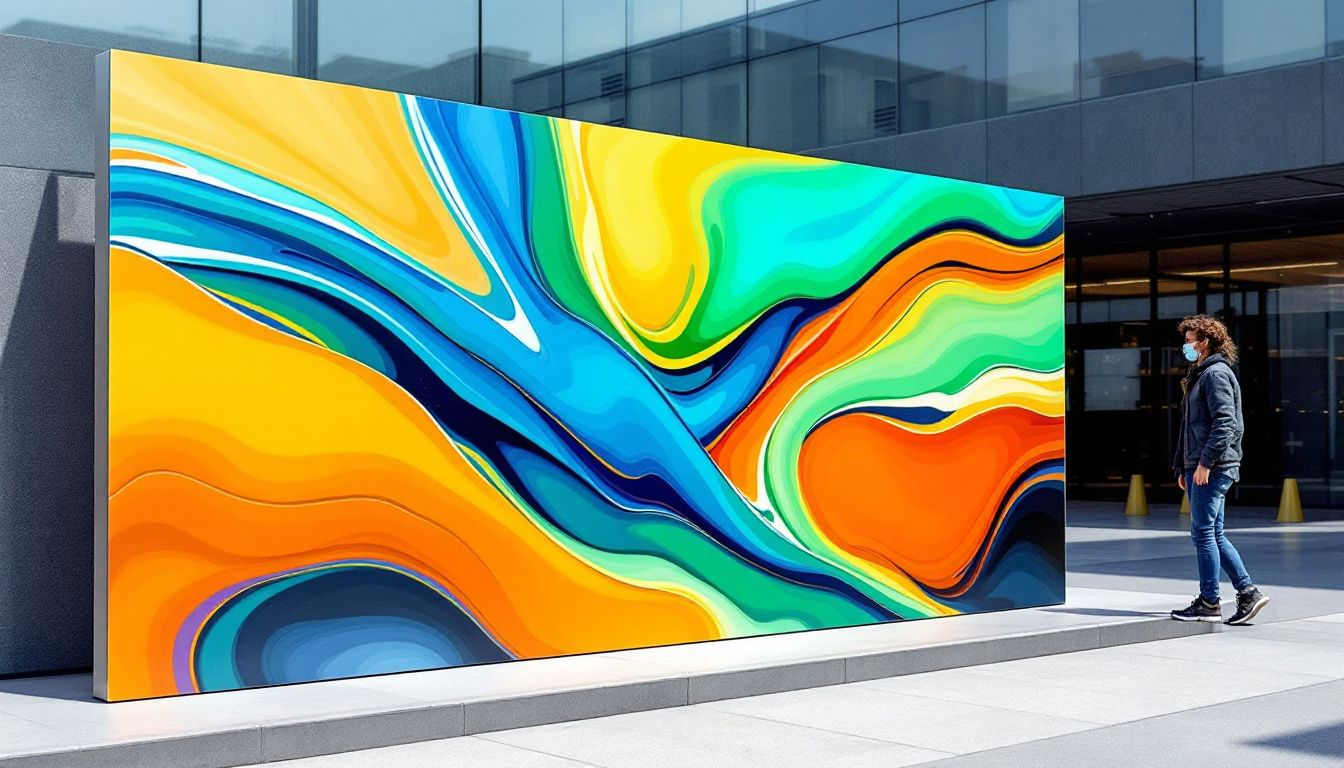
A vibrant dibond sign displayed outdoors, showcasing its durability and quality.Dibond is an aluminum composite panel that combines two thin aluminum sheets bonded to a solid polyethylene core, creating a panel with exceptional stability and a flat surface perfect for high-resolution printing. This construction delivers the rigidity needed for large signage while keeping weight low, enabling easy installation and transport in both indoor and outdoor settings. For example, retail displays leverage dibond’s flatness to present crisp branding in storefront windows without warping under sunlight exposure.

What is Dibond Material Made Of?

Dibond material consists of two 0.3 mm aluminium faces laminated onto a 3 mm to 6 mm high-density polyethene core. The aluminium layers provide corrosion resistance and a smooth print surface, while the poly core ensures impact resistance and structural integrity. This sandwich structure makes dibond panels strong, waterproof, and suitable for direct-to-substrate printing, laying the groundwork for weatherproof signage and gallery-quality photo mounting.
How Does Dibond Compare to Other Materials Like Acrylic and PVC?
When evaluating substrates for signage and art displays, weight, rigidity, cost, and weather resistance are key factors. The table below compares dibond, acrylic, and PVC on core attributes.
Substrate
Weight (per ft²)
Rigidity
Weather Resistance
Typical Cost*
Dibond (3 mm)
1.8 lbs
High
Excellent (UV-stable)
££
Acrylic (3 mm)
1.8 lbs
Moderate
Moderate (prone to UV yellowing)
£££
PVC Foam (3 mm)
0.8 lbs
Low
Fair (can warp in heat)
£
*Cost indicator: £ = Most affordable; £££ = Highest cost.
Rigid dibond panels resist bending under load and maintain vivid graphics outdoors, making them more durable than acrylic and heavier-duty than PVC foam

What Are the Thickness and Finish Options for Dibond?
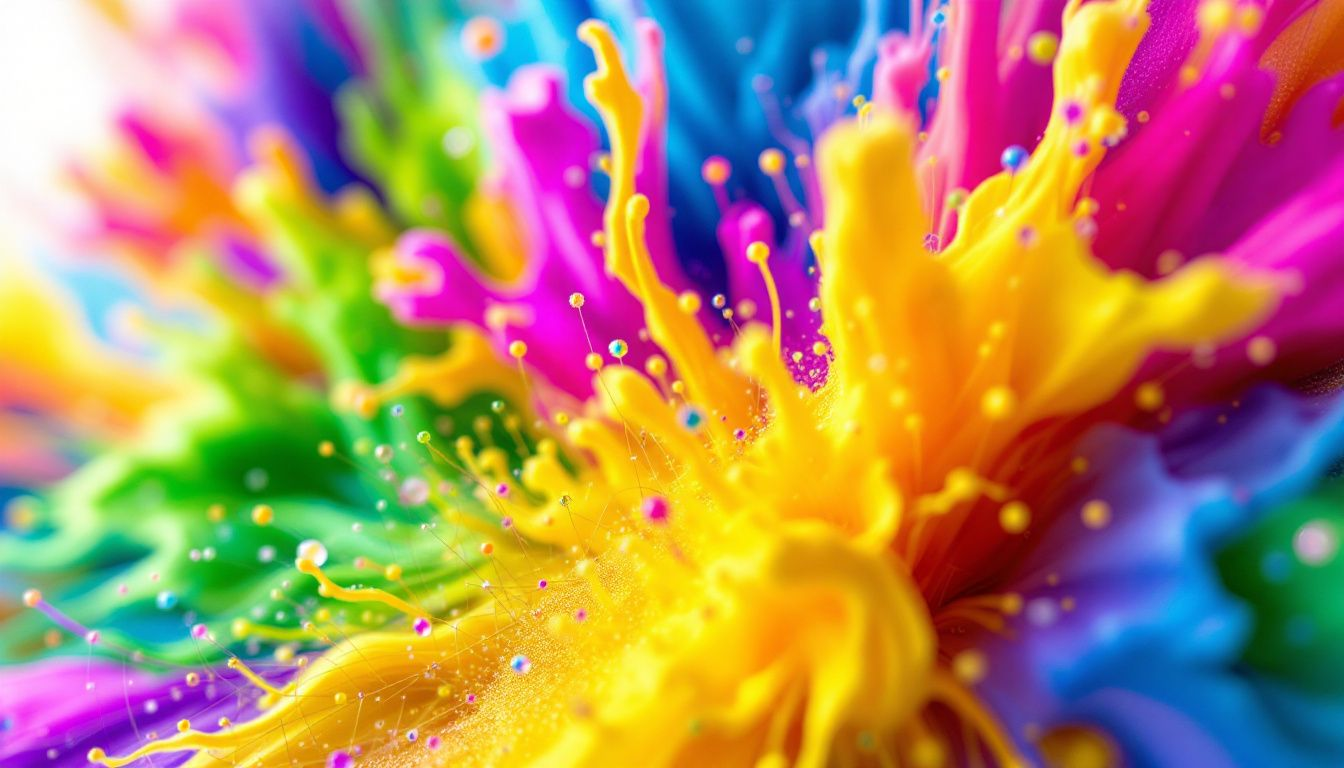
A close-up of high-resolution dibond printing showcasing vibrant colors and sharp details.
Dibond panels are available in several thicknesses and surface treatments to suit varied applications. The list below outlines common configurations.
  1. 3 mm Standard White – Optimal for most interior and exterior signs.
  2. 6 mm Brushed Silver – Offers a metallic sheen popular in fine art displays.
  3. 1/8″ Matte Black – Preferred for gallery frames and minimalist point-of-sale boards.
  4. 1/4″ Glossy White – Used for high-impact retail graphics and exhibit backdrops.
A brief comparison clarifies how finish choices impact appearance and protection.
Panel Type
Surface Treatment
Visual Effect
Scratch & UV Protection
White Matte
Powder-coated finish
Neutral, non-reflective
High
Brushed Metal
Brushed aluminum
Textured metallic sheen
Moderate
High-Gloss
UV-resistant laminate
Reflective, vibrant look
Excellent

Matte and glossy laminations enhance scratch resistance and UV stability, ensuring printed imagery retains colour fidelity under frequent handling and direct sunlight.

What Are the Key Benefits of Dibond Printing?

Dibond printing leverages aluminum composite material to produce signs and art pieces that combine longevity, stability, and superior print quality. This method yields lightweight yet sturdy panels that resist corrosion and UV damage while showcasing crisp, high-contrast graphics for both indoor exhibits and outdoor advertising.

How Durable and Weather Resistant Are Dibond Prints?
Dibond panels used in various applications, demonstrating their versatility.Dibond prints stand up to rain, wind, and intense sunlight thanks to their waterproof polyethylene core and corrosion-resistant aluminum skins. UV-cured inks bond directly to the aluminum surface, creating a weatherproof barrier that prevents fading, flaking, and moisture infiltration. Outdoor installations in coastal or high-humidity environments remain vibrant for 5–10 years without delamination, supporting long-term advertising campaigns without frequent replacement.

Why is Dibond Lightweight Yet Rigid?

The meridian of dibond’s performance lies in its sandwich construction: a lightweight polyethylene core provides bulk without weight, while the thin aluminum skins furnish stiffness and impact resistance. This combination yields a panel that weighs under 2 lbs per square foot but resists bending forces that would warp solid plastic alternatives. As a result, large-format graphics can be mounted with simple hardware without risking sagging or structural failure.
How Does Dibond Printing Achieve High-Resolution and Vibrant Colors?
Dibond printing employs UV direct-to-substrate flatbed printers that jet UV-curable inks in droplets as fine as 6 picoliters. Instantly cured by ultraviolet LEDs, these inks layer precisely on the aluminum faces, generating sharp edges and glossy color saturation. Sophisticated color management systems convert digital files to CMYK plus white ink channels, ensuring consistent skin tones and brand colors even under varied lighting conditions.

What Maintenance and Care Are Required for Dibond Prints?

Routine maintenance keeps dibond signs and art pieces looking pristine:
  • Clean with a soft, lint-free cloth and mild pH-neutral soap.
  • Avoid abrasive pads or strong solvents that can scratch laminate layers.
  • Inspect mounting hardware annually to confirm stability.
  • Store stored panels flat, protected from heavy loads, to prevent warping.
Gentle care routines preserve surface luster and prevent microabrasions that can trap dirt and degrade print vibrancy over time.

What Types of Dibond Signs and Prints Are Available?

Professional dibond printing services offer a broad array of products tailored to diverse commercial and artistic needs, from directional wayfinding signs to museum-quality photograph panels. Below is an overview of main categories and applications.

What Are the Common Uses of Outdoor Dibond Signs?

Common applications include:
  • Retail storefront signage for brand visibility.
  • Real estate boards that maintain crisp lettering under weather exposure.
  • Directional and parking signs in parks, campuses, and industrial sites.
  • Event branding for tradeshow booths and festival wayfinding.
These uses leverage dibond’s UV stability and waterproof cores to deliver long-term messaging solutions.

How Are Indoor Dibond Signs and Displays Utilised?

Indoor dibond panels appear in settings such as:
  • Corporate lobbies featuring logo plaques with brushed finishes.
  • Retail point-of-sale displays highlighting seasonal promotions.
  • Museum exhibits mounting fine art prints without warping over decades.
  • Educational institutions showcasing directories and safety instructions.
Indoor installations benefit from dibond’s smooth printing surface and minimal substrate thickness, ensuring a sleek presentation.

What Are Custom Shape and Size Options for Dibond Signs?

Custom contour cutting and CNC routing unlock shape flexibility for branded installations:
  • Logos, letters, and geometric shapes cut to 1 mm accuracy.
  • Double-sided panels for floating sign installations.
  • Oversized mural panels up to 5 × 10 ft in one piece.
  • Die-cut edge profiles for seamless wall-mounted graphics.
This level of customisation supports creative campaigns that demand unique dimensions and cut-out designs.

How Is Dibond Used for Fine Art and Photography Prints?

Gallery-quality dibond prints mount photographic images directly onto aluminium composite, offering:
  1. Brushed Metal Fine Art – metallic reflection enhances contrast and depth.
  2. Matte Photo Panels – glare-free surfaces for museum exhibitions.
  3. High-Gloss Art Reproductions – bold colour impact on white-coated panels.
  4. Frame-Ready Panels – routed back channels for invisible hanging.
Artists and photographers appreciate Dibond’s archival stability and minimal surface texture, which present imagery with museum standards of colour accuracy and flatness.

How Does the Dibond Printing Process Work?

Dibond printing integrates digital workflows with direct-to-substrate UV technologies to deliver high-performance visual products. The process ensures precise ink placement, immediate curing, and customizable finishes for every application.

What is UV Direct Printing and Why Is It Used on Dibond?

UV direct printing jets UV-curable inks directly onto the dibond surface, then instantly cures them with ultraviolet LEDs. This approach eliminates runoff and ink penetration issues common in traditional solvent printing, producing crisp edges and durable coatings that resist scratching and fading. The mechanism supports vibrant brand colours and fine detail reproduction essential for signage legibility and photographic fidelity.

How Should Files Be Prepared for Optimal Dibond Printing?

To guarantee print accuracy:
  • Supply vector logos in PDF, AI, or EPS formats to preserve edge sharpness.
  • Include high-resolution raster images at 300 DPI or greater at final print dimensions.
  • Convert colours to CMYK or include a properly profiled RGB file with embedded ICC profiles.
  • Add 0.125″ bleed around the design perimeter to accommodate trim tolerances.
Proper file preparation prevents colour shifts, unintended cropping, and resolution artifacts during large-format output.

What Are the Options for Finishes and Laminations on Dibond Prints?

Finish Type
Appearance
Protective Benefit
Matte Laminate
Soft, anti-glare
Resists fingerprints and minor scratches
Gloss Laminate
Reflective, vivid colors
Enhances UV and abrasion resistance
Anti-Graffiti Coating
Clear, durable
Allows cleaning of marker or paint
Brushed Aluminum
Metallic texture
Adds scratch-masking and premium look
These laminations extend lifespan in high-traffic areas and preserve ink adhesion under cleaning and environmental stress.

How Does Large Format Dibond Printing Enhance Visual Impact?

Printing on large dibond panels—up to 10 ft in width—creates immersive installations such as wall-sized murals or event backdrops. The rigidity of the panel ensures minimal bowing, even at grand scales, while the seamless print surface transports viewers into compelling brand experiences or photographic environments without distraction from substrate imperfections.

How to Choose Dibond Printing for Your Business or Art Project?

Selecting the right dibond printing service begins with understanding project priorities—outdoor durability, colour accuracy, turnaround speed, and budget—and matching these to provider capabilities.

What Makes Dibond Signs Better for Outdoor Advertising?

Dibond signs resist rainfall, UV degradation, and temperature fluctuation thanks to their dual aluminum skins and UV-cured inks. This durability translates to lower replacement costs, consistent brand visibility, and reliable wayfinding in exterior environments where moisture and sun exposure would degrade other substrates.

Why Is Dibond Preferred for Fine Art and Photography Displays?

Fine art dibond panels offer flat, warp-free mounting that preserves edge-to-edge image sharpness. Aluminium faces prevent dust infiltration, and archival-grade inks ensure colour stability. These qualities meet gallery standards by combining modern aesthetic finishes—brushed metal or gloss—with long-term preservation.

How Does Dibond Compare Cost-Wise to Other Sign Materials?

When factoring durability and lifecycle, dibond often offers superior value per year of service. The table below outlines typical cost per square foot versus lifespan.
Material
Approx. Cost/ft²
Expected Outdoor Lifespan
Cost per Year
Dibond (3 mm)
£20
7 years
£3.14
PVC Foam (3 mm)
£12
2 years
£6.00
Corrugated Plastic
£8
1 year
£8.00
Investing in dibond reduces long-term maintenance and replacement expenses, making it cost-effective for extended campaigns.

What Installation and Mounting Options Are Available for Dibond Signs?

Professional mounting hardware enhances stability and aesthetics:
  • Stand-off Standoffs for floating wall displays.
  • Z-Clip Brackets for quick-release wall mounting.
  • Adhesive Foam Tape for lightweight interior panels.
  • Custom Frames that encase dibond edges like canvas.
These options support both temporary exhibits and permanent signage, catering to diverse installation environments.

What Are Common Questions About Dibond Printing?

This section addresses typical concerns about performance and sustainability to help you make informed decisions when specifying dibond products.

Can Dibond Signs Be Used Outdoors in Harsh Weather?

Yes, dibond signs are engineered for outdoor resilience, featuring waterproof cores, UV-cured inks, and corrosion-resistant aluminium skins that maintain colour and structural integrity in rain, snow, and direct sunlight.

How Long Do Dibond Prints Typically Last?

Dibond prints typically last 5–10 years in outdoor settings and decades indoors when paired with appropriate laminations and routine cleaning, providing a durable solution for long-term branding and displays.

Is Dibond Environmentally Sustainable?

Dibond panels are recyclable: the aluminium skins and polyethene core can be separated and reprocessed. Many providers source post-industrial recycled content, reducing landfill impact and supporting circular material flows.

How Do I Clean and Maintain My Dibond Print?

Use a soft microfiber cloth dampened with mild soap and water to remove dust and smudges. Avoid abrasive cleaners or scrubbing pads to prevent micro-scratches in protective laminates.

Where Can You Find Quality Dibond Printing Services?

Professional dibond printing suppliers combine advanced hardware, colour management expertise, and customisation to deliver optimal visual solutions. When sourcing a provider, consider their equipment, turnaround, and support capabilities.

What to Look for in a Dibond Printing Company?

  • Modern UV Flatbed Printers for true direct-to-substrate printing.
  • Colour Profiling Expertise with calibrated monitors and proofing systems.
  • In-House CNC or Digital Cutting for custom shapes and sizes.
  • Comprehensive Finishing Options including lamination and edging.
  • Testimonials and Case Studies demonstrating successful installations.

Evaluating these criteria ensures you partner with a service that aligns with your project specifications.

How Do Leading Competitors Differentiate Their Dibond Printing?

Leading providers distinguish themselves by offering advanced color calibration workflows, rapid prototyping services, fast turnarounds, premium anti-graffiti coatings, and integrated mounting solutions that simplify installation and maintenance for clients.
Dibond printing combines material innovation with digital precision to deliver signage and art panels that perform in any environment. By understanding composition, benefits, product types, process steps, selection criteria, and common concerns, you can leverage this versatile medium for durable, visually stunning installations. Partnering with a reputable provider ensures your dibond projects meet exacting standards from design through installation.

Technical Specifications

Material

Aluminium skin - 0.3mm
Polyethylene centre

Material Thickness

3mm

Print Method

Eco friendly Latex

Artwork Guidelines

Accepted File Formats

We only accept files in PDF, AI, EPS, JPEG, PSD or TIF Formats

Bleed & Safe Area

Please see full artwork guidelines

Black Composition

Please see full artwork guidelines

Artwork DPI

Please see full artwork guidelines


Full artwork guidelines available here:

Artwork Guidelines Download Guidelines (pdf)

Frequently Asked Questions

What is Dibond board printing?

Dibond board printing is a printing process that involves the use of a composite material made of two thin sheets of aluminum bonded to a polyethylene core. This material is lightweight, yet durable, and is often used in the printing of signage, displays, and other large-format graphics. The process of printing on Dibond board begins with the preparation of the surface.

What are the benefits of Dibond board printing?

Dibond board printing is a popular choice for many types of printing projects, from signage to art prints. This type of printing offers several advantages over other printing methods. First, Dibond board printing is a durable and long-lasting option. The boards are made from two thin sheets of aluminum that are bonded together with a polyethylene core. This makes the boards strong and resistant to warping, cracking, and fading.

What are the key features of Dibond board printing?

Dibond board printing is a popular choice for many businesses and organizations because of its durability and versatility. Dibond boards are made from two sheets of aluminum that are bonded together with a polyethylene core. This makes them incredibly strong and durable, making them ideal for outdoor use.

What are the printing specifications of Dibond board printing?

Dibond board printing is a great choice for a variety of applications, from signage to displays. It is a lightweight, rigid material made up of two thin layers of aluminum with a polyethylene core. This makes it strong, durable, and resistant to corrosion. The printing specifications of Dibond board printing depend on the type of printer being used. For digital printing, the most common type of printer used is an inkjet printer.

Our Guarantee

Buying banners in confidence

You can buy from Banner World with confidence. Your job will go through several checks before manufacture. Firstly when your job comes in, we check all your uploaded files and cross-reference each file against your order. At this point, if we see that artwork is incorrect or if there is a file missing we will contact you to request new artwork. Most of our banners and fabrics are manufactured at our large print factory in Europe. Our standard turnaround on items is 5-6 working days for delivery. Even though most of our ordering system has been automated, we still carry out several manual checks before processing your order. If at any point we have a question or a problem with your order you will be contacted before manufacturing.

Our processes

Please read the information below on how your order is processed. Each order goes through several checks before printing. Our file checking service is standard procedure on all orders. Checking your files means that you can place your order in confidence, knowing that we will check to make sure your order and corresponding artwork match and are correct. Anything we are not sure that we will contact you before proceeding.

What is Our Initial checking service?

When you place an online order, we will cross-reference your artwork against your order. At this point, we will check that the artwork sizes and file type match the order. We will make sure we have the correct number of artwork files for the job. At this stage, if anything appears to be incorrect, we will place the order on hold and contact you immediately.

How do we process your order?

Once we are happy with your order, we will then process it. We collate all the information for each job, including finishing and material type. The job information is then sent with your artwork to the pre-press department. Pre-press is where we will create and prepare your job for printing.

Our Pre Press and second checking service.

Pre-press refers to the stage before printing. Here your artwork is converted into the correct format for our machines and finishing processes. At this point, if something is spotted which isn’t correct or if there is a problem we will again contact you.

How do we print and track your order through the factory?

Your job is now batched together with other items on the same material. Each item has assigned to it a unique code. The code is used to track the order through our factory. The information is used to check the material, quantity and finishing information on the item. The order then goes through our print presses.

How do we finish your printed items?

Every job we produce is different to the next, whether it be size, material, shape or finishing. Your printed items will be finished as requested on your order. We automate as much of the finishing as possible, cutting down on labour costs and passing on the savings to you. The Prepress data is inputted into parts of our finishing equipment. Your graphics are now finished to your custom requirements. Each printed product is set up differently for each type of finishing process. A banner that has hem and eyelets will be manufactured and produced in a different way to a flag with a pole pocket.

How are your items packed?

We have now manufactured your items. The finishing pieces now move onto the packing department. At the packing stage, we collate your order. Items get checked off against the order using the order code system. The printed goods get wrapped and packed, ready for despatch.

How do you ship my goods?

Now your item has been packed it is ready to be shipped. From placing your order, your goods have taken approx 24-48 hours to get to this stage. We have a logistics team which arrange the shipping through UPS. Our standard delivery (£15 or free over £250) will now take an additional three days to be delivered to an address on UK mainland and most of mainland Europe. Our standard shipping will travel via road and sea to reach the UK. We do offer a faster 1-day shipping method which is our 4-day turnaround service. The fast turnaround service is expensive on low-value bulky orders and is more cost-effective on higher volume jobs. Items to the US and other worldwide destinations will take longer to be delivered. For items going to Ireland, the Isle of Wight, Isle of Man, Scottish highlands etc. please add an extra day onto delivery times