The UK climate is the real test of any outdoor banner. Choosing the best banner material for outdoor use depends on where the banner will be displayed. Wind off the coast, weeks of rain, then a burst of strong summer sun all work away at the print and the material. Pick the right one, and the banner will do its job for years. Pick the wrong one, and it fades, sags or tears long before it should.
We print and supply the full range of outdoor banners, so we see every day which material suits which job. This guide walks through each option, explains where it works best, and offers a simple way to choose the right material for your site.
What outdoor use really demands in the UK
Before the materials, it helps to know what you are choosing against, because a handful of factors decide which banner lasts and looks good outdoors.
Wind is the big one, and the most common cause of failure, since a solid banner acts like a sail and exposed or high positions need a material that lets air through. Rain and damp matter too, so the material has to be fully weatherproof and waterproof and able to shrug off standing water without warping.
Sun and UV do their quiet damage over months, and although the British sun is not the fiercest, cheap inks still fade, making print quality as important as the material itself. Size feeds straight back into wind, because the bigger the banner, the more it catches, which pushes larger jobs towards mesh.
Last come lifespan and budget, as a weekend event banner and a permanent shopfront sign have very different needs, and paying for either extreme in the wrong place simply wastes money. The best material is the one that matches your own mix of these.
Outdoor banner materials at a glance
| Material | Best for | Weather resistance | Print quality | Wind performance |
|---|---|---|---|---|
| Premium PVC | Shopfronts, promotions and general advertising | Excellent | Excellent | Good |
| Mesh PVC | Scaffolding, fences and building wraps | Excellent | Very good | Excellent |
| PVC Airmesh | Coastal and high-wind locations | Excellent | Good | Outstanding |
| Fabric | Events, exhibitions and premium displays | Good | Excellent | Fair |
| Eco banner | Sustainable campaigns and environmentally focused projects | Excellent | Excellent | Good |
Solid PVC banners: the everyday outdoor workhorse
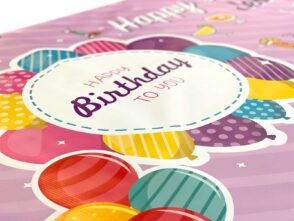
Solid PVC, often called vinyl, is the material most people picture when they think of a banner, and for good reason. It is tough, fully waterproof and gives the sharpest, most vivid print of any option. Printed with UV-resistant, fade-resistant inks, it holds its colour through rain and sun and keeps working for years outdoors.
We supply it in a few weights. A premium 500gsm PVC is the sensible all-rounder for outdoor advertising, shopfronts and roadside display, while a lighter, cheaper event banner suits one-off or short-term promotions where the banner will not be up for long.
Heavier still, a 650gsm block-out material is used for double-sided work such as lamp post banners, where the middle layer stops one side showing through to the other.
With quality printing, proper installation and normal outdoor conditions, a premium PVC banner can often provide several years of reliable service.
When solid PVC is the right pick
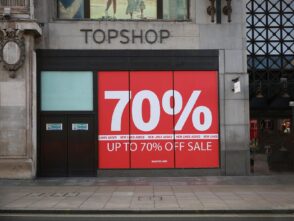
Reach for solid PVC when print punch matters and wind is not the main worry, so walls, hoardings, sheltered frames, shopfronts and events. Our PVC banners cover this everyday work.
The one place it struggles is on large or exposed sites, where its solid face catches the wind, and that is where mesh takes over.
Mesh banners: built for wind
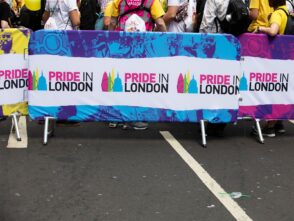
Mesh is PVC covered in thousands of tiny holes that let air pass straight through the face. That single feature changes everything outdoors. Wind flows through rather than pushing against it, so the banner flaps less, strains its fixings less, and is far less likely to tear or pull loose. It is lighter than solid PVC too, which helps on large spans.
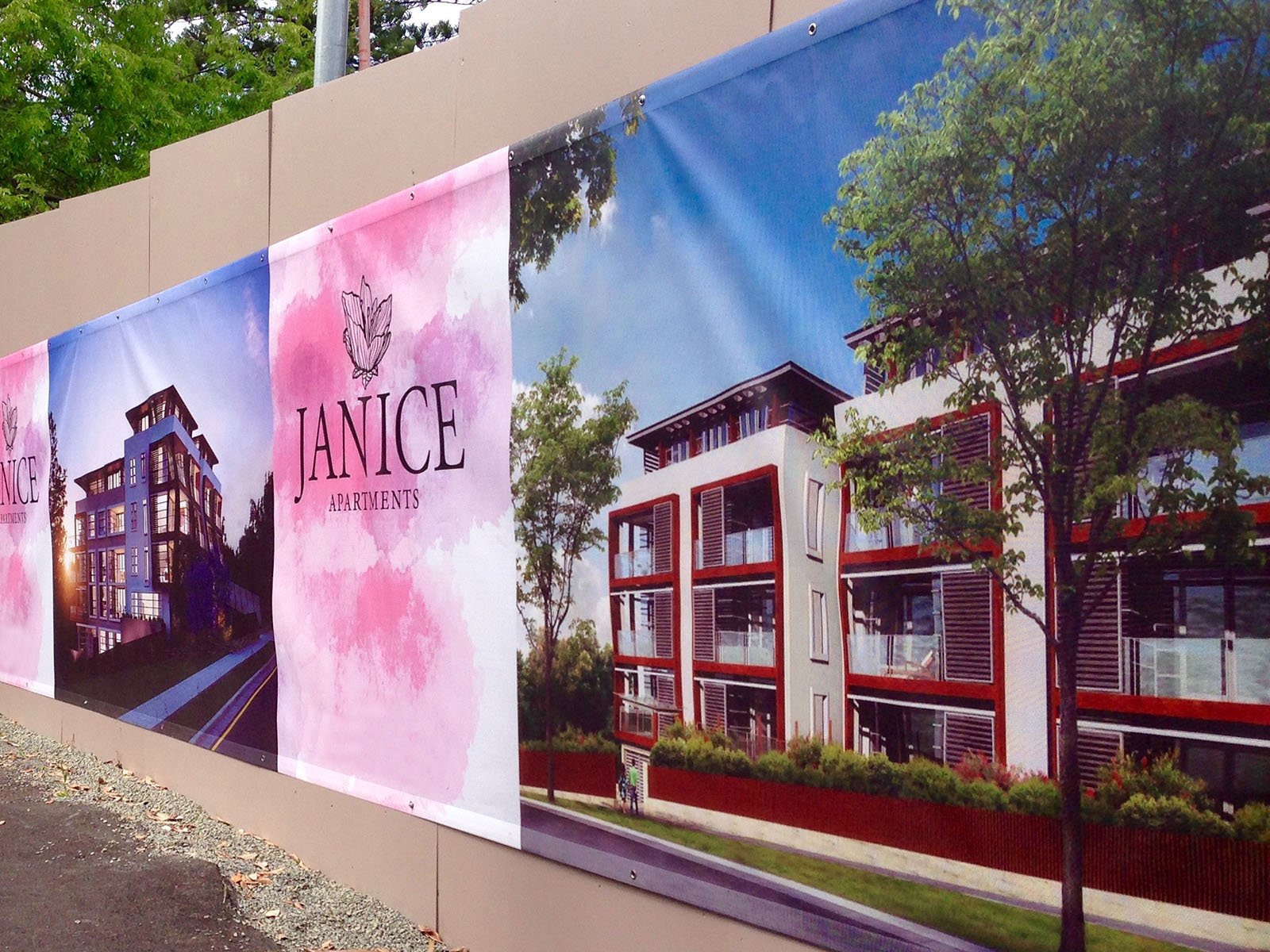
Those qualities make mesh the natural choice for anything big or exposed, such as fences, railings, scaffolding, construction hoardings and full building wraps.
The trade-off is a slightly less dense print up close due to the perforations, but at normal outdoor viewing distance, the design reads cleanly and the difference is not noticeable. Our mesh banners are a popular pick wherever wind is a factor.
PVC Airmesh for the most exposed sites
For the windiest positions, standard mesh can be upgraded to PVC Airmesh. It is lighter again and more open, with larger holes that let even more air through, so it is our go-to for high-rise wraps, coastal sites and anywhere the gusts are fierce.
If wind is your biggest concern, our PVC Airmesh banners are the strongest option in the range.
Fabric banners: the premium finish
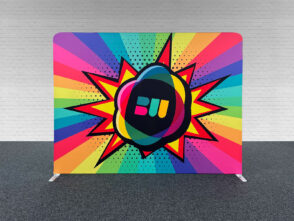
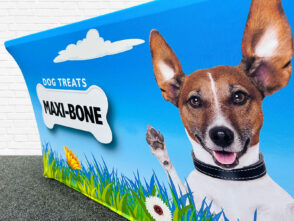
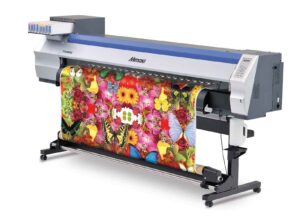
Fabric banners are printed on woven polyester using a dye-sublimation process, in which the ink is converted to vapour and bonded into the fibres. The result is a softer, richer and more upmarket look than PVC, with deep colours and no plastic sheen.
Fabric is lighter, folds without creasing and is more environmentally friendly than PVC, which is why it is a favourite for events, exhibitions, stage backdrops and any job where presentation is everything.
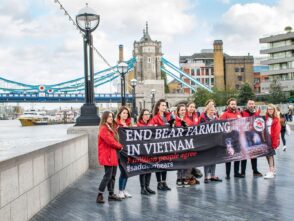
It is genuinely usable outdoors, and we print outdoor-grade fabrics, but it is worth being honest about the setting. For rugged, long-term exposure on an open site, solid PVC or mesh still takes rough weather better over the long haul.
For premium display and shorter outdoor runs, fabric is hard to beat. Take a look at our fabric banners for that higher-end finish.
Eco-friendly and recyclable banner options
More of our customers ask for a greener option every year, and there are now proper alternatives to standard PVC. Our PVC-free eco banners are made from fully recyclable materials and printed with latex inks, which are cleaner than solvent inks and give an excellent, high-resolution finish.
For windy sites, there is also an eco-mesh, a PVC-free polyester mesh that is recyclable yet still lets the wind through.
These suit any project where sustainability matters, from council and public-sector work to brands that want to reduce their footprint. The print quality is as good as standard PVC, so choosing greener no longer means compromising on how the banner looks.
Our eco banner range covers both solid and mesh options.
How to choose the right material for your site
With the materials covered, here is the simple way to land on the right one. Work through these in order, and the choice usually makes itself.
By weather and exposure
Windy or exposed, go mesh, or Airmesh at the extreme. Sheltered but rain-heavy, solid PVC handles water and damp with ease. For strong sun on a long-term sign, choose a heavier PVC printed with UV-resistant, fade-resistant inks so the colour lasts.
By size
Size and wind go hand in hand. The larger the banner, the more wind it catches, so big outdoor jobs tend to lean towards mesh, almost regardless of position. As a rough guide, once a banner is large and out in the open, mesh is the safer default.
By lifespan and budget
Match the spend to the job. A short-term event banner does not need premium material, whereas a permanent shopfront sign is worth the heavier PVC, which will still look sharp in a few years.
Paying for a long-life material during a weekend promotion or skimping on a permanent one both waste money.
By sustainability
If a lower footprint is part of the brief, the eco and eco-mesh materials offer a recyclable option without compromising print quality, and they often win favour on public-sector and brand-led projects.
How to make an outdoor banner last
Whatever material you pick, fitting and finishing decide how long it survives.
Start with the right finish: hems and eyelets suit most banners; reinforced edges add strength on larger ones; and pole pockets spread the load when a banner slides onto a bar or tube.
Fix at enough points, because the bigger and more exposed the banner, the more fixings you want. Space them evenly so no single point takes all the strain.
Keep the banner taut as well, since one left slack will flap in the wind and wear itself out, so tension it firmly across every edge.
Finally, insist on UV-resistant, fade-resistant inks, because good solvent or latex inks are what keep the colour strong through a British year of sun and rain. Get these points right, and even a modest banner will outlast a premium one that was hung badly.
Which material should you choose? A quick guide
The answer depends on where and how the banner will be used:
- Choose solid PVC for everyday outdoor advertising, shopfronts, events and any job where sharp print leads and wind is not the main issue.
- Choose mesh for large, high or exposed sites such as fences, scaffolding, construction sites and building wraps.
- Choose PVC Airmesh for very exposed, coastal or high-rise locations where maximum airflow is needed.
- Choose fabric for premium displays, exhibitions and events where the finish matters most.
- Choose eco or eco-mesh where sustainability is an important part of the brief.
Our recommendation
For most outdoor jobs, a good, solid PVC banner is the reliable all-rounder, and it is where we would start when wind is not a concern. Once a banner goes large, high or exposed, switch to mesh, stepping up to PVC Airmesh in the harshest spots.
Choose fabric when presentation is the priority, and the eco range when a lower footprint is a priority. The honest answer, as ever, is that the best material is the one matched to your site, your size and your budget rather than any single winner.
Banner World has been producing outdoor banners for businesses, construction companies, retailers, event organisers and local authorities across the UK for many years. If you are unsure which material is right for your project, our team can recommend the most suitable option based on your location, installation method and how long the banner needs to last.
If you would like a steer for a particular job, browse our full banner range or get in touch for a quote, and we will point you to the right material.
For a closer look at the two most popular outdoor options head-to-head, our guide to mesh vs PVC banners goes into more detail.