


Choosing the right size and placement for an event banner can make a big difference to how well it performs. A banner that is too small, too cluttered or positioned in the wrong place can easily be missed, even at a busy event.
The most effective event banners are designed around three things: where they will be displayed, how far away people will view them from, and what action you want people to take. Whether you are planning an exhibition, festival, sports event, trade show or corporate function, banner size and placement should be considered before artwork is created.
Why Event Banner Size Matters
Banner size affects visibility, readability and overall impact. A small banner may work well at a registration desk or indoor stand, but it will not have the same effect at an outdoor festival, stadium or large exhibition hall.
Before choosing a size, think about:
- Where the banner will be displayed
- How far away will people view it from
- Whether it will be used indoors or outdoors
- How much text needs to be included
- Whether the banner needs to be fixed, freestanding or portable
As a general rule, the further away the audience is, the larger the banner and text need to be.
Common Event Banner Sizes
There is no single perfect event banner size, but some dimensions are more commonly used because they offer a practical balance between visibility, cost and ease of installation.
- 850mm x 2000mm: Common size for roller banners and exhibition displays.
- 2m x 1m: Useful for smaller indoor events, walls, railings and compact outdoor spaces.
- 3m x 1m: A popular all-round size for outdoor events, promotional displays and general advertising.
- 4m x 1m or 4m x 2m: Suitable for larger venues, stage areas and high-visibility displays.
- 6m x 2m: Often used for festivals, sports events, large fences, building fronts and major promotional areas.
For more general guidance, see our banner size guide.
Choosing Banner Size by Viewing Distance
Viewing distance is one of the most important factors when choosing an event banner. If people are walking past at close range, smaller text and more detail may be acceptable. If the banner needs to be seen from across a venue, field, car park or exhibition hall, the message must be much larger and simpler.
For long-distance visibility, use:
- A short headline
- Large, bold text
- High-contrast colours
- Simple imagery
- A clear call to action
A banner should usually communicate the main message within a few seconds. If people need to stop and study it, the design is probably too busy.
Best Banner Materials for Events
The right material depends on the event location, weather exposure and how the banner will be fixed.
PVC Banners
PVC banners are one of the most popular options for event advertising. They are durable, weather-resistant and suitable for both indoor and outdoor use. PVC is a good choice for festivals, sports events, trade promotions, sponsor banners and general event signage.
Mesh Banners
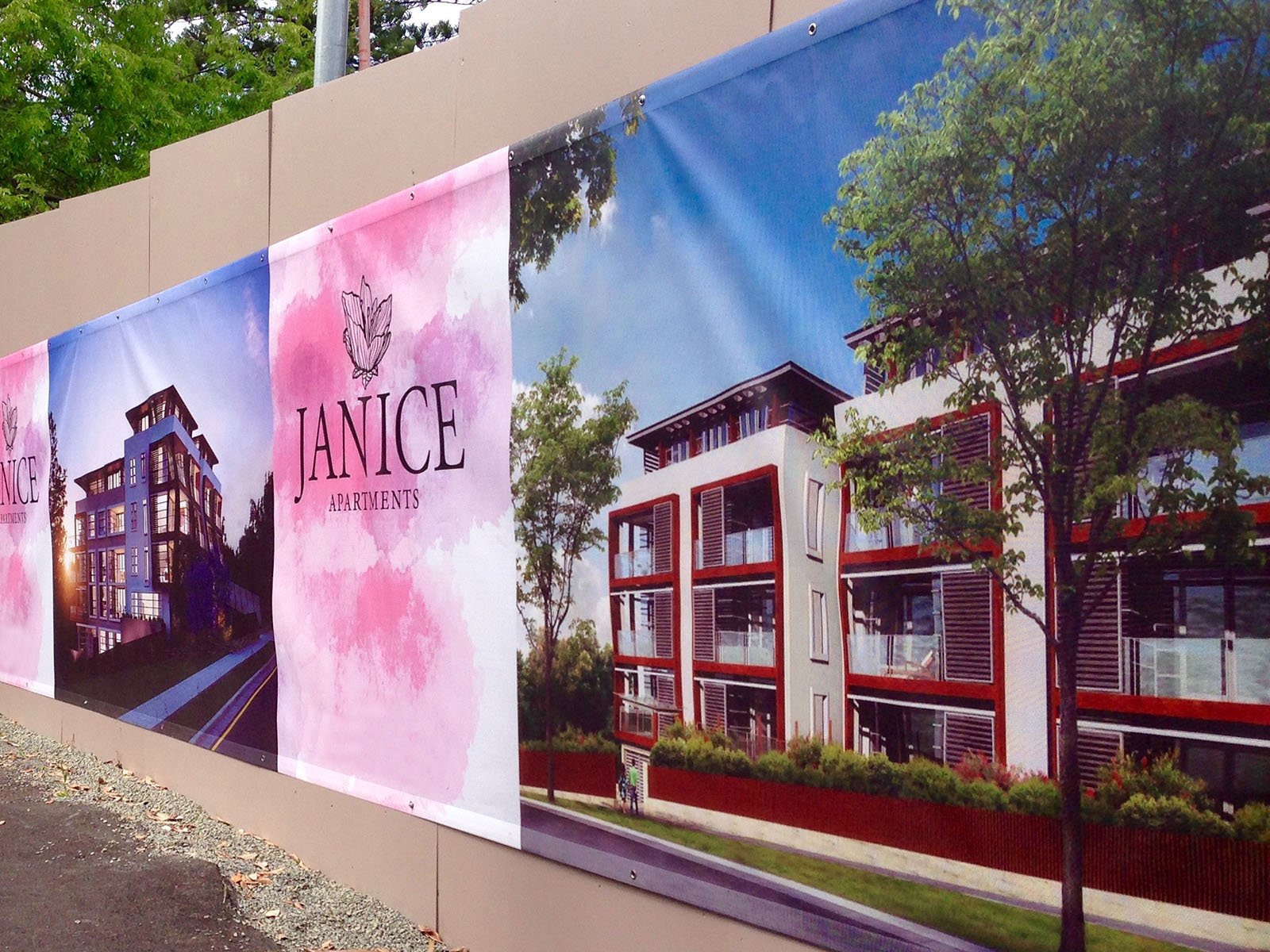
Mesh banners are ideal for exposed outdoor locations where wind may be an issue. The perforated material allows air to pass through, reducing wind resistance compared with solid PVC. Mesh is often used on fencing, scaffolding, large outdoor venues and open event spaces.
Fabric Banners
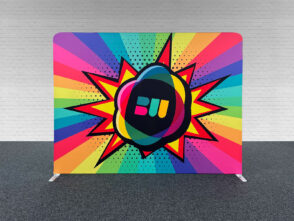
Fabric banners are best suited to indoor events where a softer, premium finish is required. They work well for conferences, exhibitions, corporate displays and branded backdrops because they reduce glare and offer a professional appearance.
Where to Place Event Banners for Maximum Visibility
Placement is just as important as size. A well-designed banner will only work if people can actually see it.
Good event banner locations include:
- Event entrances
- Registration areas
- Queueing points
- Stage backdrops
- Exhibition stands
- Food and drink areas
- Car parks and arrival routes
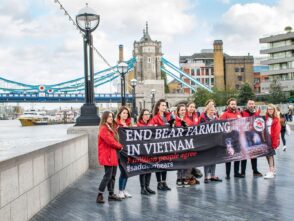
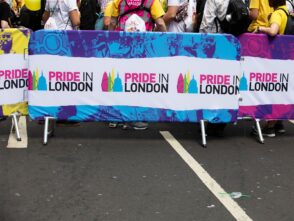
- Fencing, barriers and perimeter areas
- Directional decision points
Think about how people move through the venue. Banners should be placed where attendees naturally look, pause or change direction.
Banner Placement Height
The ideal height depends on the type of event and the level of crowding. At indoor events, banners positioned around eye level are usually easiest to read. In busier outdoor spaces, banners may need to be installed higher so they remain visible above crowds.
For crowded events, avoid placing important messages too low. People, tables, barriers or temporary equipment can block the banner once the venue fills up.
Avoiding Common Banner Placement Mistakes
Many event banners fail because they are placed in areas with poor sight lines or too much visual competition.
Common mistakes include:
- Placing banners behind queues or crowds
- Using small text in long-distance locations
- Positioning banners too low at busy events
- Installing banners where lighting causes glare
- Placing banners parallel to foot traffic instead of facing people directly
- Using too many banners in one area creates visual clutter
Before installing banners, walk through the venue as an attendee would. This helps identify the best sight lines and the areas most likely to attract attention.
Design Tips for Readable Event Banners
Event banners need to work quickly. People may only glance at them for a second or two, so the design should be simple and easy to understand.
For better readability:
- Use a short headline
- Keep body text to a minimum
- Use clear fonts rather than decorative typefaces
- Choose strong contrast between text and background
- Use high-resolution artwork and images
- Leave enough space around the main message
- Include one clear call to action
If the banner includes dates, times, stand numbers, web addresses or sponsor details, make sure those elements are large enough to read from the intended viewing distance.
Indoor Event Banner Placement
Indoor events usually have more controlled lighting and less wind exposure, but they also have space limitations. Ceiling height, wall space, stands, furniture and foot traffic all affect where banners can be placed.
For exhibitions and trade shows, roller banners and fabric displays are often useful because they are portable, easy to set up and can be positioned close to the audience. For conference stages, wider fabric or PVC banners can create a branded backdrop.
Outdoor Event Banner Placement
Outdoor events usually require larger banners and stronger fixings. Wind, rain, sunlight and viewing distance all need to be considered.
For outdoor events, choose weather-resistant materials and ensure banners are securely fixed with suitable eyelets, hems, bungee cords, cable ties, or appropriate frame systems. In exposed areas, mesh may be more suitable than solid PVC because it allows wind to pass through.
Matching Banners to Event Type
Different events need different banner styles.
Festivals
Festival banners should be bold, simple and easy to read from a distance. Larger PVC or mesh banners are often used at entrances, stage areas, fencing and sponsor zones.
Exhibitions and Trade Shows
Exhibition banners need to attract attention in a busy hall. Roller banners, fabric displays and branded backdrops work well for stands, product launches and lead generation areas.
Sports Events
Sports event banners are often displayed on barriers, fencing, perimeter boards or around viewing areas. They need strong visibility and durable materials, especially outdoors.
Corporate Events
Corporate banners should feel professional and consistent with the brand. Fabric banners, backdrop displays and carefully placed sponsor signage are usually more suitable than overly busy promotional graphics.
Final Thoughts
The best event banners are not just well-designed; they are planned around the space, audience, and viewing distance. Choosing the right size, material and placement helps your message get noticed and makes your event branding look more professional.
Whether you need banners for a festival, exhibition, corporate event, sports venue or promotional campaign, planning the practical details before printing will help you get better value and stronger visibility from your display.




Leave a Reply
You must be logged in to post a comment.