


Construction sites often blend into the background of busy streets, but effective branding can turn scaffolding into a highly visible advertising and communication space. Scaffold banners help construction companies increase visibility, improve professionalism and communicate important information to the public while projects are underway.
Large-format scaffold banners transform bare scaffold structures into branded displays visible from long distances. They help promote construction companies, advertise developments and improve public awareness around active sites.
Scaffold banners are also practical. They can improve the site’s presentation, provide privacy screening, and display important safety messaging without compromising the project’s appearance.
The Role of Scaffold Banners in Construction Site Branding
Construction scaffolding provides a large elevated display area that naturally attracts attention. Rather than leaving scaffolding exposed and unfinished, branded banners allow companies to create a cleaner, more professional visual presence throughout the project.
Scaffold banners are commonly used for:
- Construction company branding
- Property development marketing
- Public-facing refurbishment projects
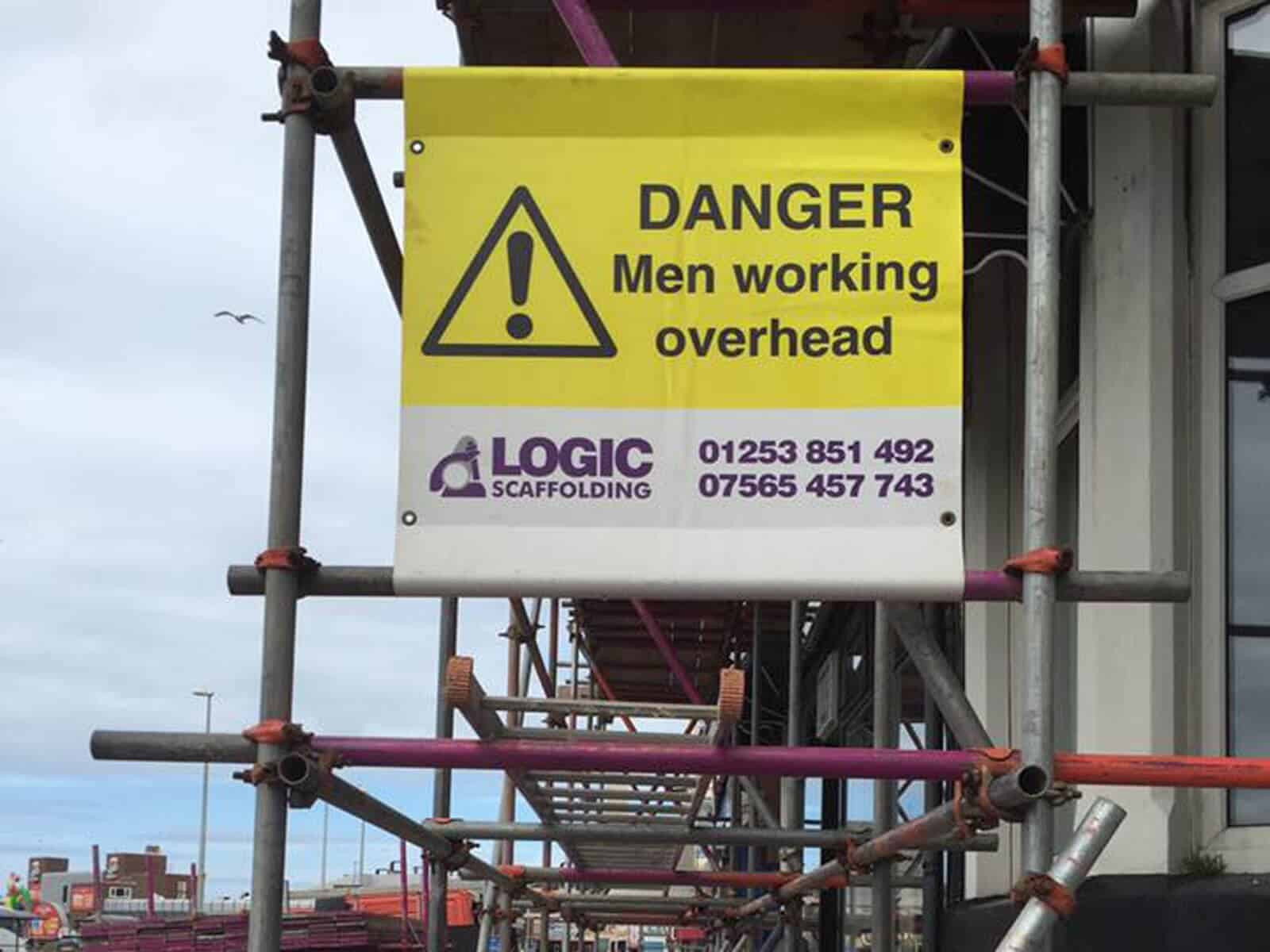
- Site safety messaging
- Privacy screening
- Fence and perimeter graphics
- Promotional advertising
For projects located in busy urban areas, scaffold graphics can generate thousands of daily impressions from pedestrians, road traffic and nearby businesses.
How Scaffold Banners Improve Visibility
Construction sites naturally occupy prominent roadside and city centre locations. Scaffold banners help make better use of this visibility by displaying branding and messaging across large areas that would otherwise remain unused.
Well-positioned scaffold banners can:
- Increase brand recognition
- Promote construction developments
- Advertise upcoming projects
- Improve public awareness
- Create sponsor visibility
- Make construction sites appear more professional
Because scaffold structures are often elevated above street level, banners can remain visible from considerable distances, especially on larger developments and high-rise projects.
Creating a Professional Construction Site Appearance
Large construction projects can sometimes appear messy or disruptive to surrounding areas. Scaffold banners help improve the appearance of active sites by covering exposed scaffolding with clean, professionally printed graphics.
For public-facing projects, this can improve how the company and development are perceived by:
- Local residents
- Passing traffic
- Potential clients
- Investors
- Businesses near the site
Consistent branding across scaffold banners, fencing and site signage helps create a more organised and established appearance throughout the construction period.
Using Scaffold Banners for Construction Marketing
Scaffold banners provide a valuable advertising opportunity during long-term projects. Construction sites often remain active for months, allowing banners to generate ongoing visibility in high-traffic locations.
Many companies use scaffold graphics to promote:
- Property developments
- Upcoming residential projects
- Commercial units
- Retail developments
- Construction services
- Contractor branding
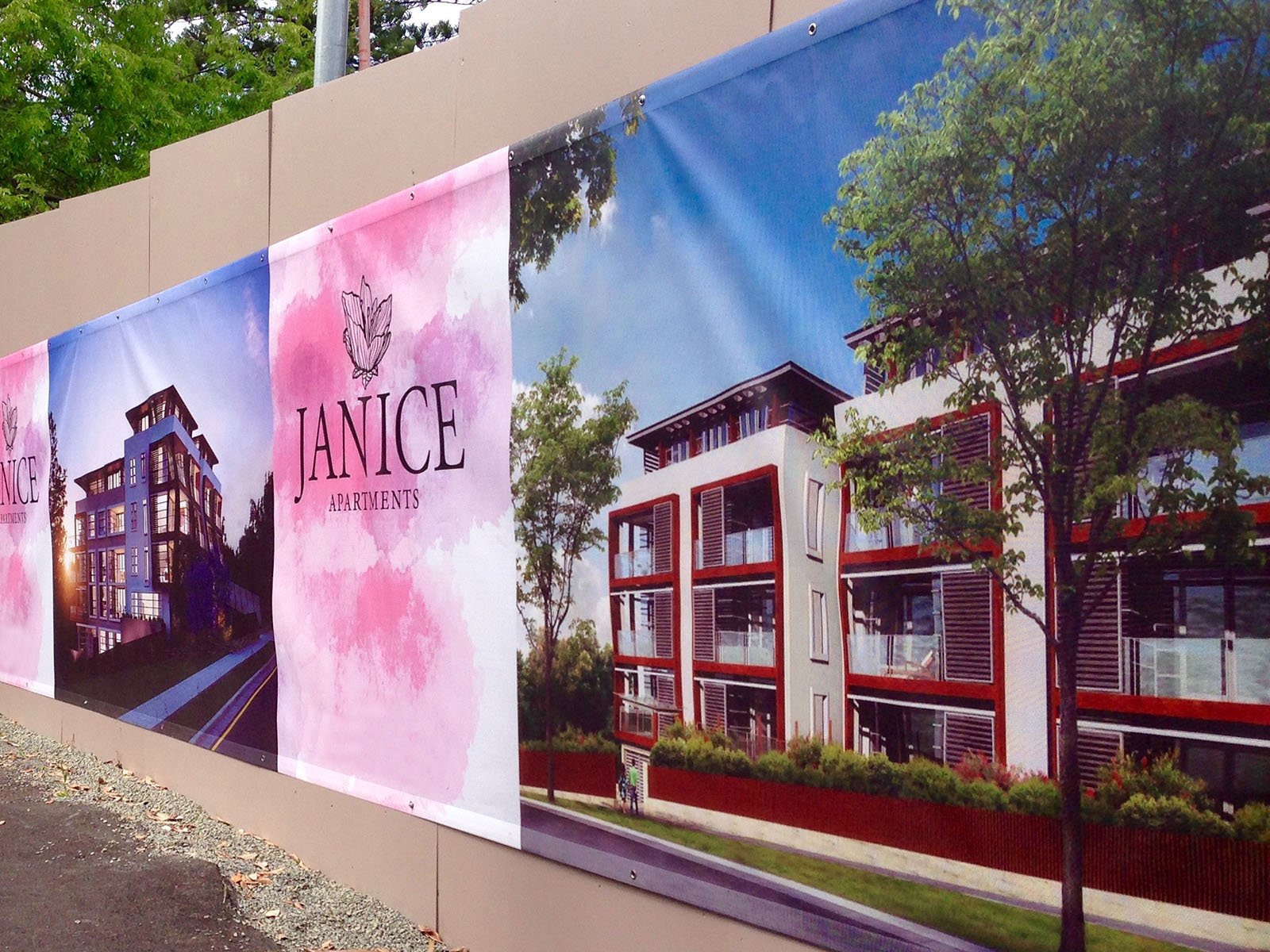
Architectural visuals and project renderings can also help communities understand what the finished development will look like.

Mesh Scaffold Banners for Exposed Sites
Mesh scaffold banners are often used on exposed or high-rise construction sites where wind resistance is an important consideration.
The perforated material allows air to pass through the surface, reducing wind loading on the scaffold structure. This makes mesh particularly suitable for:
- High-rise scaffolding
- Open or exposed sites
- Large building wraps
- Temporary perimeter graphics
- Fence branding
Although the perforations slightly soften the print close up, mesh banners still provide excellent visibility from normal outdoor viewing distances.
PVC Scaffold Banners for Maximum Branding Impact
PVC scaffold banners are designed to produce stronger colours and sharper graphics than mesh materials.
Because the surface is solid, PVC is often the better choice for:
- Detailed branding
- Photographic graphics
- High-impact advertising
- Property marketing
- Public-facing construction sites
Solid PVC banners are generally more suitable for smaller scaffold areas or lower-wind locations because they create greater wind resistance than mesh materials.
Double-Sided Scaffold Banners
Double-sided scaffold banners are useful for locations where visibility is needed from multiple directions.
These banners use heavyweight blockout PVC material that prevents graphics from showing through between sides, allowing different messaging to be displayed on each face.
Double-sided scaffold banners are commonly used for:
- Roadside developments
- City centre projects
- Pedestrian walkways
- Temporary event structures
- Dual-direction advertising
Integrating Branding and Safety Messaging
Scaffold banners can combine branding with important public information and safety messaging. Many construction sites use banners to communicate:
- PPE requirements
- Restricted access warnings
- Public safety notices
- Contractor details
- Directional information
- Emergency contact information
Using scaffold graphics for both branding and communication helps maximise the value of the display space while improving site presentation.
Our guide to construction site safety banners explains this in more detail.
Designing Effective Scaffold Banners
Scaffold banners are usually viewed from a long distance, so designs should remain simple, bold, and easy to read.
Effective scaffold banner design typically includes:
- Large company logos
- Short headlines
- High-contrast colours
- Minimal text
- Clear contact details
- Simple messaging
Overcrowded layouts often become difficult to read from street level. Clear branding and concise messaging usually perform far better than highly detailed designs.
Scaffold Banner Fixings and Installation
Proper installation is essential for both appearance and durability.
Common scaffold banner finishing options include:
- Hem and eyelets
- Pole pockets
- Reinforced hems
- Bungee cord fixing systems
- Reinforced welds for larger banners
Pole pockets are particularly popular for scaffold structures because they allow poles to pass through the banner, providing a cleaner, more secure installation.
Our scaffold banner materials and fixings guide explains these options in more detail.
Scaffold Banners and Site Privacy
Construction sites often need temporary privacy screening, especially in busy public areas. Scaffold banners help reduce visual disruption while creating a cleaner site appearance.
Mesh and PVC scaffold graphics can partially or fully obscure the work area, depending on the material chosen, helping:
- Reduce visual clutter
- Improve public perception
- Limit visibility into the site
- Create a more controlled project presentation
Scaffold Banners for Long-Term Projects
Many developments remain under construction for extended periods, making scaffold branding a valuable long-term advertising opportunity.
High-quality scaffold banners printed using durable UV-resistant inks can maintain strong colour and readability throughout prolonged outdoor exposure.
Mesh materials often perform better on highly exposed sites because they reduce wind loading, whereas premium PVC provides a stronger visual impact in more controlled conditions.
Final Thoughts
Scaffold banners do far more than cover construction scaffolding. They help improve visibility, reinforce branding, communicate safety information, and create a more professional site appearance throughout a project.
Whether you need mesh scaffold graphics for exposed sites, PVC banners for high-impact branding or double-sided displays for roadside visibility, the right scaffold banner solution can transform temporary construction structures into valuable communication and advertising space.
Explore our full range of scaffold banners, including mesh, PVC and double-sided options suitable for construction sites, building refurbishments and large-scale outdoor branding projects.








Leave a Reply
You must be logged in to post a comment.